
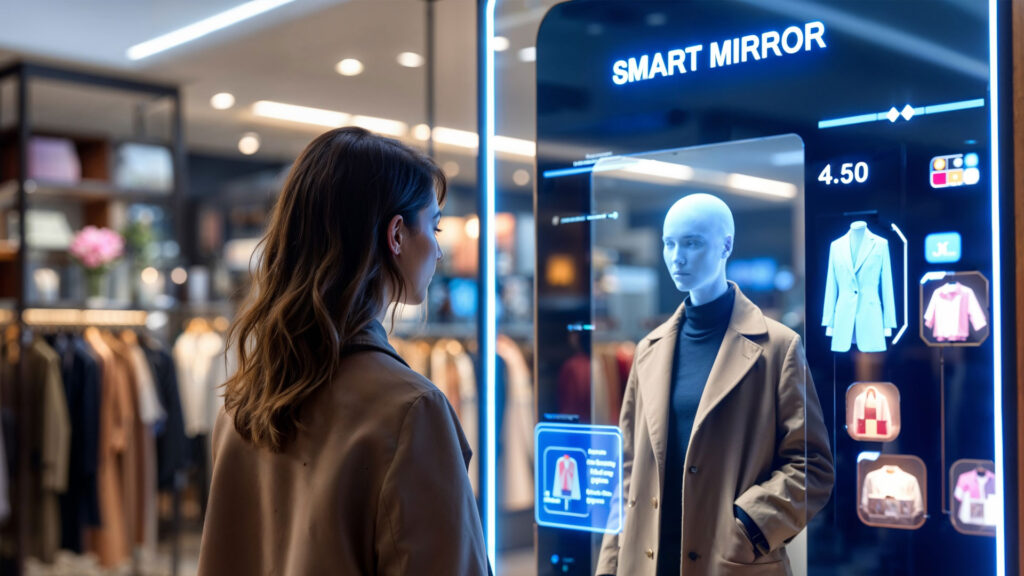
How AI Is Being Used in Consumer Electronics Today
Artificial Intelligence is no longer a futuristic concept reserved for supercomputers or research labs. Today, AI in consumer electronics is the invisible engine driving the devices we use every hour. From the smartphone in your pocket to the thermostat on your wall, machine learning and neural processing are fundamentally changing how hardware functions.
The integration of AI in consumer electronics matters today because it shifts the paradigm from reactive tools to proactive assistants. We are moving away from devices that simply follow instructions and toward systems that learn habits, anticipate needs, and optimize performance in real-time. Whether you are seeking better battery life, professional-grade photography, or a more secure home, AI is the primary catalyst for these advancements.
This article explores the current landscape of AI-driven hardware, the technical architecture making it possible, and what the future holds for smart ecosystems.
What is AI in Consumer Electronics?
At its core, AI in consumer electronics refers to the integration of machine learning (ML) models and specialized hardware into everyday devices. Unlike traditional software that follows rigid “if-this-then-that” logic, AI-enabled devices use data to improve their own performance.
The Shift to On-Device AI Processing
In the early days of smart tech, most “intelligence” happened in the cloud. When you spoke to a voice assistant, your audio was sent to a remote server, processed, and a response was sent back. Today, the trend has shifted toward on-device AI processing.
This transition is driven by three main factors:
- Latency: Processing data locally is significantly faster than waiting for a round-trip to a server.
- Privacy: Sensitive data, such as facial recognition or voice recordings, never has to leave the device.
- Reliability: AI features can function even without an active internet connection.
The Technical Architecture: Powering the Edge
The “brain” of a modern smart device is no longer just a Central Processing Unit (CPU). To handle the massive mathematical demands of neural networks, manufacturers have introduced specialized silicon.
Neural Processing Units (NPUs)
A Neural Processing Unit (NPU) is a specialized circuit designed specifically to accelerate machine learning tasks. While CPUs are great for general tasks and GPUs excel at graphics, NPUs are optimized for the matrix multiplications and tensors used in AI models.
The efficiency of these chips is often measured in TOPS (Tera Operations Per Second). For example, a modern smartphone might feature an NPU capable of $30$ to $50$ TOPS, allowing it to run complex generative models locally without draining the battery.
Smart Sensor Technology
AI doesn’t just process data; it also changes how data is collected. Smart sensor technology involves embedding low-power AI directly into sensors (like cameras or microphones). These sensors can “decide” which data is important, ignoring background noise or static images and only waking up the main processor when a relevant event—like a person entering a room—is detected.
Major Use Cases Across the Industry
The application of AI in consumer electronics is diverse, touching every major hardware category.
1. AI-Powered Smartphones
The smartphone is the flagship for consumer AI. It is likely the most advanced AI device you own.
- Computational Photography: Modern phones use AI to stack multiple frames, reduce noise, and simulate depth-of-blur (bokeh). This allows tiny mobile sensors to rival professional DSLR cameras.
- Live Translation: Real-time, two-way voice and text translation is now possible on-device, breaking language barriers during travel or business.
- Battery Optimization: AI tracks your usage patterns to “hibernate” apps you rarely use, extending battery life significantly.
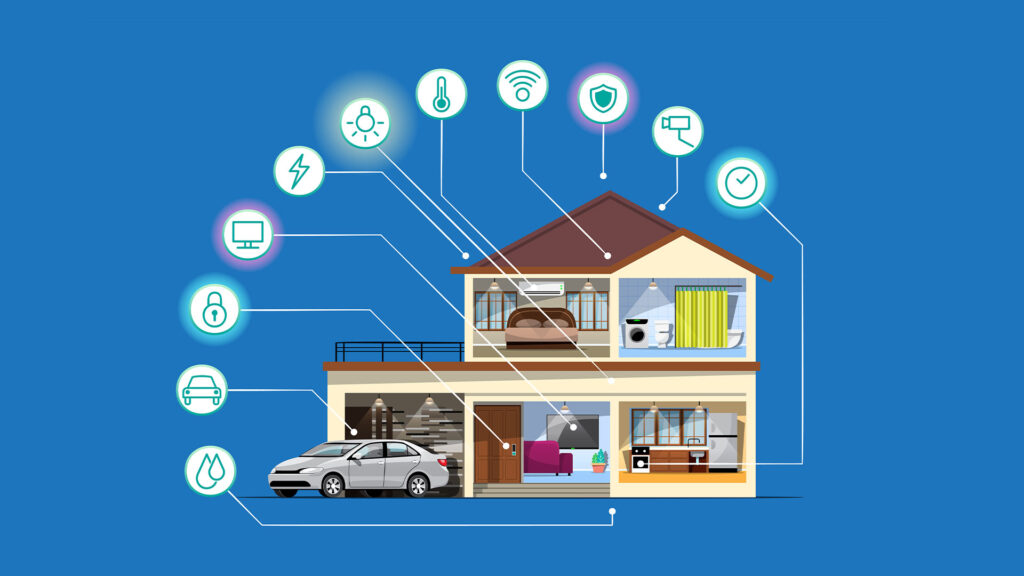
2. Smart Home AI Systems
Smart home AI systems are evolving from simple remote controls to autonomous environments.
- Adaptive Climate Control: Smart thermostats like Nest use reinforcement learning to understand when you are home and what temperatures you prefer, reducing energy waste.
- Intelligent Security: AI-powered cameras can now distinguish between a family member, a delivery driver, and a stray animal, drastically reducing false alarms.
- Predictive Maintenance: Smart appliances can monitor their own vibration and power draw to alert you before a motor or heating element fails.
3. Laptops and Productivity
With the rise of “AI PCs,” laptops now feature dedicated silicon to assist with professional workflows.
- Background Noise Cancellation: AI models can isolate your voice from a barking dog or a vacuum cleaner during video calls.
- Generative Drafting: On-device models assist in summarizing long documents or generating images without requiring cloud access.
- System Resource Management: The OS uses AI to shift power between the CPU and GPU based on whether you are gaming, editing video, or browsing the web.
Benefits and Limitations
Integrating AI in consumer electronics offers clear advantages, but it is not without its hurdles.
Key Benefits
| Feature | Impact on User |
| Personalization | Devices adapt to your specific voice, face, and habits. |
| Efficiency | Significant reductions in power consumption via AI energy management. |
| Accessibility | Voice-to-text and gesture control empower users with disabilities. |
| Longevity | Software updates can improve hardware performance over time through better models. |
Current Limitations
- Thermal Management: Running high-TOPS AI models generates significant heat, which can be difficult to dissipate in thin devices.
- Cost: Specialized AI silicon (NPUs) and high-speed memory increase the retail price of premium gadgets.
- Data Hunger: To remain “smart,” these devices need constant streams of data, which raises valid privacy concerns.
Security, Privacy, and “Edge AI”
As we rely more on AI in consumer electronics, the question of “Who owns the data?” becomes critical. Most modern manufacturers are leaning into Edge AI to address this.
Edge AI refers to performing all AI calculations locally on the device rather than the cloud.
Technical Insight: By keeping data “at the edge,” the attack surface for hackers is reduced. A data breach at a central server could expose millions of users, but with on-device processing, your biometric and behavioral data never leaves your physical possession.
However, consumers should still be wary of “shadow data”—metadata about usage that is still sent back to manufacturers for “product improvement.”
Common Myths and Misconceptions
Despite its ubiquity, there is a lot of “hype” surrounding AI in consumer electronics. Let’s debunk a few common myths.
- Myth 1: “AI is just a buzzword for better software.”
- Fact: True AI involves hardware-level acceleration and models that adapt based on new data. It is fundamentally different from static code.
- Myth 2: “AI makes my devices listen to me 24/7.”
- Fact: While “wake words” require a low-power microphone to be active, modern smart sensor technology uses a local buffer that is constantly overwritten and never stored or sent to the cloud unless the wake word is detected.
- Myth 3: “AI will make my old devices obsolete immediately.”
- Fact: While new hardware has better NPUs, many AI features are being “back-ported” to older devices via cloud-hybrid models.
Comparison: On-Device AI vs. Cloud-Based AI
Understanding the difference helps in choosing the right products for your needs.
| Criteria | On-Device AI | Cloud-Based AI |
| Speed | Near-instant (Low Latency) | Dependent on Internet speed |
| Privacy | High (Data stays on device) | Lower (Data sent to servers) |
| Power | Higher local battery drain | Low local drain (Offloaded) |
| Capabilities | Limited by device hardware | Virtually unlimited (Server-side) |
| Internet Dependency | Works offline | Requires connection |
Future Trends: Agentic AI and Wearables
The next frontier for AI in consumer electronics is Agentic AI. This refers to systems that don’t just wait for a prompt but can take multi-step actions to achieve a goal.
Imagine telling your phone, “I want to go to the beach this Saturday,” and the AI checks the weather, finds a rental car, suggests a packing list based on your past trips, and sets an alarm—all autonomously.
In the world of machine learning in wearables, we will see:
- Proactive Health Monitoring: Watches that can predict the onset of a cold or a cardiac event days before symptoms appear.
- Augmented Reality (AR): Glasses that use computer vision to identify people at a conference or provide real-time repair instructions for home DIY projects.
Best Practices for Consumers
If you are looking to invest in the latest smart tech, follow these implementation tips:
- Check for an NPU: When buying a laptop or phone, look for “AI-ready” specs or dedicated neural hardware.
- Verify Offline Capabilities: Ask if the AI features (like translation or voice control) work without an internet connection. This is a good indicator of true on-device AI processing.
- Audit Permissions: Regularly check which apps have access to your “Smart” data.
- Prioritize Ecosystems: AI works best when your phone, watch, and home hubs can share “context” (while maintaining privacy).
Frequently Asked Questions (FAQ)
What is the most common use of AI in consumer electronics?
The most common use is in computational photography and voice assistants. AI helps smartphones take better photos by processing light and color in real-time and allows devices like smart speakers to understand natural language.
Does AI in gadgets drain the battery faster?
Initially, AI tasks were power-heavy. However, the introduction of Neural Processing Units (NPUs) has made AI tasks much more energy-efficient. Modern AI energy management actually helps extend battery life by optimizing background processes.
Is my data safe with AI-powered devices?
Security depends on whether the device uses on-device AI processing. Devices that process data locally are generally much safer than those that send your data to the cloud. Always check the manufacturer’s privacy policy regarding “Edge AI.”
Do I need a special processor to run AI on my laptop?
To run modern generative AI features locally and efficiently, you generally need a processor with a dedicated AI accelerator, often marketed as an “AI PC” or featuring an NPU from Intel, AMD, or Apple (M-series).
Can AI in consumer electronics work without the internet?
Yes, many modern devices are designed for offline AI. Features like live translation, facial recognition, and basic voice commands increasingly rely on local models that do not require a web connection.
What is a Neural Processing Unit (NPU)?
An NPU is a specialized processor designed to handle the complex mathematical calculations required for machine learning and neural networks. It is much more efficient at these tasks than a standard CPU.
Final Thoughts
The integration of AI in consumer electronics is transforming our hardware from static tools into dynamic, learning partners. By leveraging Neural Processing Units (NPUs) and on-device AI processing, manufacturers are delivering faster, more private, and highly personalized experiences. As we move toward more autonomous “Agentic AI,” the line between the user and the device will continue to blur, making our digital lives more seamless than ever before.