Understanding The Science Behind Skin Cancer: Causes, Risk Factors, and Prevention
Skin cancer is the most common cancer worldwide, affecting millions of people every year. Despite its prevalence, many people still misunderstand how it develops, who is most at risk, and—most importantly—how it can be prevented. The Science Behind Skin Cancer: Causes, Risk Factors, and Prevention is rooted in biology, genetics, and environmental exposure, particularly ultraviolet (UV) radiation.
At its core, skin cancer begins when DNA inside skin cells becomes damaged and starts to mutate uncontrollably. While our bodies are equipped with repair mechanisms, repeated or severe damage can overwhelm these systems. Over time, abnormal cells multiply, forming malignant tumors.
The encouraging news is that skin cancer is also one of the most preventable forms of cancer. Scientific research clearly shows that lifestyle choices, early detection, and protective habits dramatically reduce risk. This article explores the science in a clear, accessible way—breaking down causes, risk factors, and proven prevention methods backed by medical evidence.
What Is Skin Cancer? A Scientific Overview
Skin cancer occurs when abnormal skin cells grow uncontrollably due to DNA damage. This damage disrupts the normal cell cycle, allowing cells to divide when they should not and avoid programmed cell death (apoptosis).
How Healthy Skin Cells Normally Work
- Skin cells grow, divide, and replace old or damaged cells.
- DNA repair enzymes correct most damage caused by environmental stress.
- If damage is too severe, the cell self-destructs to protect the body.
What Goes Wrong in Skin Cancer
- DNA mutations accumulate.
- Repair mechanisms fail or are overwhelmed.
- Cells continue dividing despite damage.
- Tumors form and may spread (metastasize).
The Three Main Types of Skin Cancer
1. Basal Cell Carcinoma (BCC)
- Most common form of skin cancer.
- Develops in basal cells at the bottom of the epidermis.
- Rarely spreads but can cause severe local damage.
2. Squamous Cell Carcinoma (SCC)
- Originates in squamous cells near the skin surface.
- Can spread if untreated.
- Often appears on sun-exposed areas like the face and hands.
3. Melanoma
- Least common but most dangerous.
- Develops in melanocytes (pigment-producing cells).
- Highly aggressive and responsible for most skin cancer deaths.
The Primary Cause: Ultraviolet (UV) Radiation
UV radiation is the leading cause of skin cancer. It damages DNA directly and indirectly, triggering mutations that accumulate over time.
Types of UV Radiation
- UVA: Penetrates deep into the skin; causes aging and indirect DNA damage.
- UVB: Affects the skin surface; causes sunburn and direct DNA mutations.
- UVC: Absorbed by the ozone layer and does not reach Earth.
Scientific studies from organizations like World Health Organization confirm that both UVA and UVB contribute to skin cancer development.
Indoor Tanning: A Scientifically Proven Danger
Artificial tanning devices emit concentrated UVA and UVB radiation. According to cancer research data, using tanning beds before age 35 significantly increases melanoma risk.
Why tanning beds are dangerous:
- Radiation intensity can exceed natural sunlight.
- Exposure is concentrated and repeated.
- DNA damage accumulates faster.
Many countries now regulate or ban indoor tanning for minors due to overwhelming scientific evidence.
Genetic Mutations and Skin Cancer
Not all skin cancer risk comes from the sun. Genetics play a crucial role.
Key Genetic Factors
- Mutations in tumor-suppressor genes (like p53).
- Inherited conditions affecting DNA repair.
- Family history of melanoma.
Some individuals are genetically less efficient at repairing UV-induced DNA damage, making them more vulnerable even with limited sun exposure.
Risk Factors Explained by Science
1. Skin Type
- Fair skin with low melanin offers less UV protection.
- Light eyes and hair increase susceptibility.
2. Cumulative Sun Exposure
- Long-term exposure damages DNA over decades.
- Outdoor workers face higher lifetime risk.
3. Age
- Risk increases with age due to accumulated DNA damage.
- Melanoma rates are rising among younger populations due to tanning.
4. Weakened Immune System
- Organ transplant recipients and immunocompromised individuals are at higher risk.
Environmental and Lifestyle Risk Factors
- Living near the equator or at high altitudes.
- Reflective surfaces like water, sand, and snow.
- History of severe sunburns, especially in childhood.
- Lack of sun protection habits.
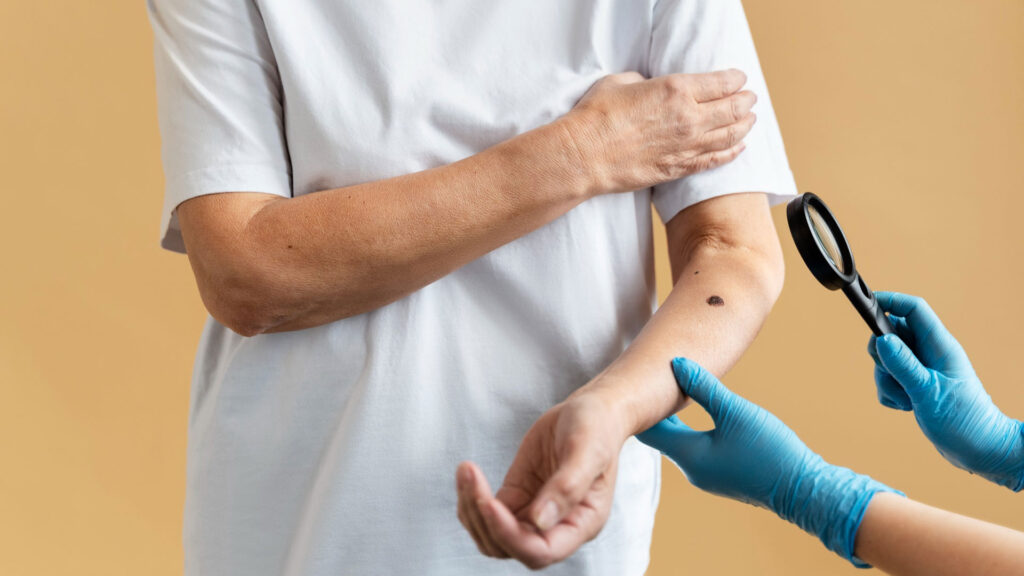
Early Warning Signs: The ABCDE Rule
Doctors use the ABCDE rule to detect melanoma early:
- A – Asymmetry
- B – Border irregularity
- C – Color variation
- D – Diameter over 6mm
- E – Evolving appearance
Early detection dramatically improves survival rates.
Prevention Science: How to Protect Your Skin
1. Sunscreen Use (Evidence-Based)
- Use broad-spectrum SPF 30 or higher.
- Reapply every two hours.
- Protects against both UVA and UVB damage.
2. Protective Clothing
- Wide-brim hats.
- UV-blocking sunglasses.
- Long sleeves with tight weave.
3. Behavioral Changes
- Seek shade between 10 AM and 4 PM.
- Avoid intentional tanning.
- Be cautious even on cloudy days.
The Role of Nutrition and Skin Health
Antioxidants help neutralize free radicals caused by UV exposure.
Helpful nutrients include:
- Vitamin C
- Vitamin E
- Beta-carotene
- Omega-3 fatty acids
While diet alone cannot prevent skin cancer, it supports overall skin resilience.
FAQs About The Science Behind Skin Cancer: Causes, Risk Factors, and Prevention
Can skin cancer develop without sun exposure?
Yes. Genetics, immune suppression, and chemical exposure can contribute, though UV radiation remains the main cause.
Is darker skin immune to skin cancer?
No. While melanin offers protection, skin cancer can still occur and is often diagnosed later.
Does sunscreen completely prevent skin cancer?
No, but it significantly reduces risk when combined with other protective measures.
Are children more vulnerable to sun damage?
Yes. Early DNA damage increases lifetime cancer risk.
Can skin cancer spread to other organs?
Melanoma can metastasize if not detected early.
How often should skin exams be done?
Monthly self-checks and annual professional exams are recommended.
