Introduction to Online Business
Starting an online business has never been more accessible—or more profitable—than it is today. With millions of people turning to the internet for shopping, education, and entertainment, the opportunities for entrepreneurs are endless. In this guide, we’ll explore everything you need to know about starting an online business—from ideation to scaling.
What is an Online Business?
An online business operates primarily through the internet, offering products, services, or information to customers globally. This can include e-commerce stores, digital services, affiliate marketing, content creation, and more.
Why 2025 is the Perfect Year to Start
Technological advancements, increased digital literacy, and affordable online tools make 2025 the ideal time to build your dream business. Remote work culture and AI automation have created a thriving ecosystem for digital entrepreneurs.
Common Myths About Online Businesses
Many believe starting online requires a large investment or advanced tech skills. In reality, anyone with determination, strategy, and internet access can succeed.
Benefits of Starting an Online Business
Financial Freedom and Flexibility
Owning an online business allows you to set your schedule, choose your clients, and control your income potential.

Low Startup Costs
Unlike brick-and-mortar businesses, online ventures require minimal capital—just a laptop, internet connection, and a smart business idea.
Global Reach and Scalability
You can reach customers worldwide with minimal effort, scaling your business through digital marketing and automation.
Choosing the Right Business Model
E-commerce Stores
Sell physical or digital products through platforms like Shopify or WooCommerce. E-commerce remains one of the most lucrative online business models.
Digital Products and Courses
Share your expertise by creating digital downloads, e-books, or online courses. This model generates passive income over time.
Freelancing and Consulting
Use your skills to help others. Platforms like Upwork and Fiverr make it easy to connect with global clients.
Subscription-Based Models
Offer memberships or recurring products to ensure stable monthly revenue.
Researching Your Target Market
Identifying Your Ideal Customer
Develop buyer personas by considering age, interests, location, and pain points.
Analyzing Competitors
Study your competitors to identify gaps in their offerings. Tools like SEMrush and SimilarWeb can help.
Tools for Market Research
Leverage platforms like Google Trends, Ahrefs, and social media analytics for deep insights.
Building a Profitable Online Business Idea
How to Validate Your Idea
Use surveys, pre-orders, or beta launches to ensure market demand before full-scale development.
Finding a Unique Value Proposition (UVP)
Your UVP defines what sets you apart. Ask: “Why should customers choose me over competitors?”
Creating a Business Plan for Success
Key Components of a Business Plan
Include your vision, mission, goals, marketing strategy, and financial projections.
Setting SMART Goals
Your goals should be Specific, Measurable, Achievable, Relevant, and Time-bound.
Financial Planning and Budgeting
Track expenses carefully. Use tools like QuickBooks or Notion to manage finances efficiently.
Registering Your Business Legally
Choosing a Business Structure
Decide between a sole proprietorship, LLC, or corporation depending on your needs.
Getting Licenses and Permits
Check your country’s regulations for online businesses to stay compliant.
Understanding Taxes for Online Entrepreneurs
Consult with a tax professional to manage income and deductions properly.
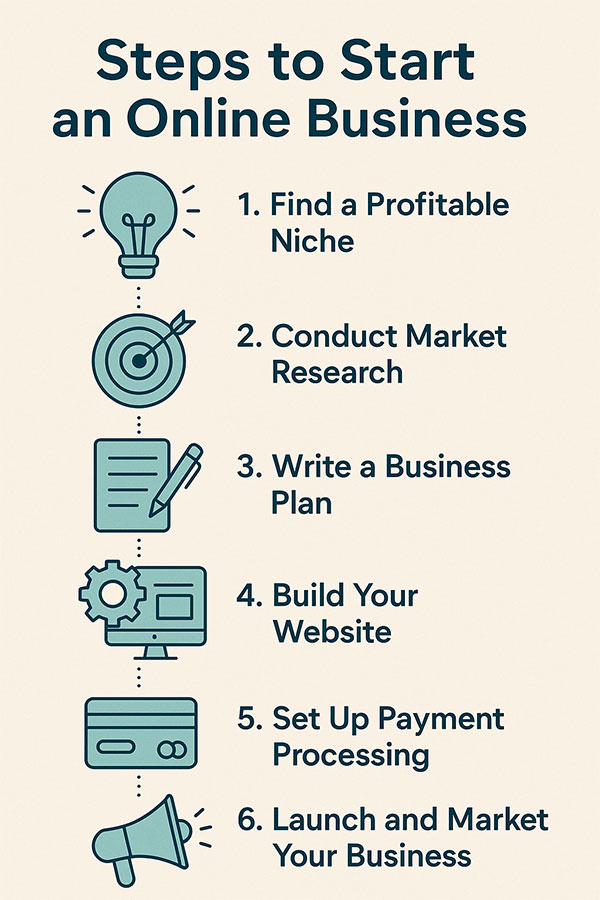
Setting Up Your Website and Online Presence
Selecting a Domain Name
Pick a domain that’s short, memorable, and reflects your brand.
Choosing the Right Hosting Platform
Reliable hosting ensures fast loading and minimal downtime—consider Bluehost or SiteGround.
Designing a User-Friendly Website
A clean, responsive design enhances user experience and conversions.
Building a Strong Brand Identity
Crafting Your Brand Voice
Define your tone—professional, playful, or educational—and maintain it across all channels.
Creating a Memorable Logo
Use tools like Canva or hire designers from Fiverr to create a visual identity.
Establishing Brand Consistency Across Channels
Consistency builds trust. Use uniform colors, fonts, and messaging on all platforms.
Setting Up Online Payment Systems
Choosing Payment Gateways
Integrate secure and flexible payment options like PayPal, Stripe, or Square.
Managing Transactions Securely
Always use SSL certificates and two-factor authentication to protect customer data.
Digital Marketing Strategies for Online Businesses
Marketing is the engine that drives your online business forward. Without it, even the best products can remain unseen. Here’s how to create a marketing system that works 24/7 for your brand.
Search Engine Optimization (SEO) Basics
SEO ensures your business appears in search engine results when people look for your products or services. Focus on:
- Keyword Research: Use tools like Google Keyword Planner and Ahrefs to find search terms your audience uses.
- On-Page SEO: Optimize titles, meta descriptions, and headings using your main keyword—like starting an online business.
- Backlinks: Build authority by guest posting or collaborating with influencers.
A strong SEO strategy can bring long-term, organic traffic to your website without paying for ads.
Email Marketing Campaigns
Email marketing is one of the most powerful tools for nurturing relationships with your audience.
Create a lead magnet (like a free guide or discount) to collect emails, then send personalized messages and offers. Tools like Mailchimp or ConvertKit make automation easy.
Social Media Advertising
Platforms like Facebook, Instagram, TikTok, and LinkedIn can drive massive traffic to your site.
- Use short-form videos to boost engagement.
- Run retargeting ads to re-engage users who visited your site but didn’t purchase.
Influencer Marketing
Partner with micro-influencers in your niche. They can authentically promote your product to a highly engaged audience.
Leveraging E-Commerce Platforms and Tools
Your business is only as efficient as the tools you use. The right platforms can help you save time and scale effortlessly.
Shopify, WooCommerce, and Etsy Overview
- Shopify: Perfect for beginners wanting a full-service store setup.
- WooCommerce: Best for WordPress users who prefer flexibility.
- Etsy: Ideal for handmade or creative products.
Automation and CRM Tools
Tools like HubSpot, Zapier, and ActiveCampaign help automate emails, sales tracking, and customer relationships—freeing you to focus on growth.
Scaling Your Online Business
Once you’ve built a stable foundation, it’s time to scale your online business for consistent profits and sustainability.
Outsourcing and Hiring Virtual Assistants
Delegating tasks like customer service, content creation, or social media management allows you to focus on strategic growth.
Expanding Product Lines
Introduce new variations or complementary products. Analyze customer feedback to identify potential opportunities.
Building Customer Loyalty Programs
Offer reward points, discounts, or exclusive memberships to retain loyal customers. Loyal customers are far more valuable than one-time buyers.
Common Mistakes to Avoid When Starting Online
Even experienced entrepreneurs make mistakes. Learning to recognize and avoid them can save you both time and money.
Ignoring Market Research
Skipping research leads to wasted effort on products that don’t sell. Always validate demand before launching.
Poor Financial Management
Track all expenses and profits. Lack of financial discipline is one of the main reasons startups fail.
Neglecting Customer Experience
Customers remember how you make them feel. Offer excellent support and respond quickly to inquiries.
Measuring Success and Tracking Progress
To ensure your business is growing, you need to measure performance regularly.
Using Analytics Tools
Platforms like Google Analytics, Hotjar, and Kissmetrics provide valuable insights into customer behavior and website performance.
Key Performance Indicators (KPIs) to Monitor
Keep track of:
- Conversion Rate
- Customer Acquisition Cost (CAC)
- Lifetime Value (LTV)
- Website Traffic and Bounce Rate
Analyzing these metrics will guide future strategies and help optimize performance.
How much does it cost to start an online business?
You can start with as little as $100–$500 depending on your niche. Domains, hosting, and initial marketing are your primary costs.
What’s the best online business to start in 2025?
Some top models include digital products, freelancing services, and dropshipping stores—all scalable with minimal investment.
Some top models include digital products, freelancing services, and dropshipping stores—all scalable with minimal investment.
Do I need technical skills to build an online business?
Not necessarily! Platforms like Shopify, Wix, and Squarespace make it easy to create and manage your business without coding.
What’s the best online business to start
Some top models include digital products, freelancing services, and dropshipping stores—all scalable with minimal investment.
Do I need technical skills to build an online business?
Not necessarily! Platforms like Shopify, Wix, and Squarespace make it easy to create and manage your business without coding.
How long does it take to make money from an online business?
Typically, it takes 3–6 months to start seeing consistent income—depending on your marketing and niche strategy.
What are the biggest challenges of running an online business?
Competition, maintaining consistency, and keeping up with technology are common challenges. However, with persistence and adaptation, they can be overcome.
Is an online business sustainable long-term?
Absolutely! With the global shift to digital services and remote work, online businesses are only becoming more essential.
Conclusion: Turning Your Online Dream into Reality
Starting an online business is more than a financial opportunity—it’s a chance to create freedom, impact, and a lifestyle you control.
By following this guide, you’ve learned how to choose the right model, validate your idea, build your brand, and grow strategically.
